Category: News

  • Our Split Blog in may – the Fear of AI

    Our Split Blog in may – the Fear of AI

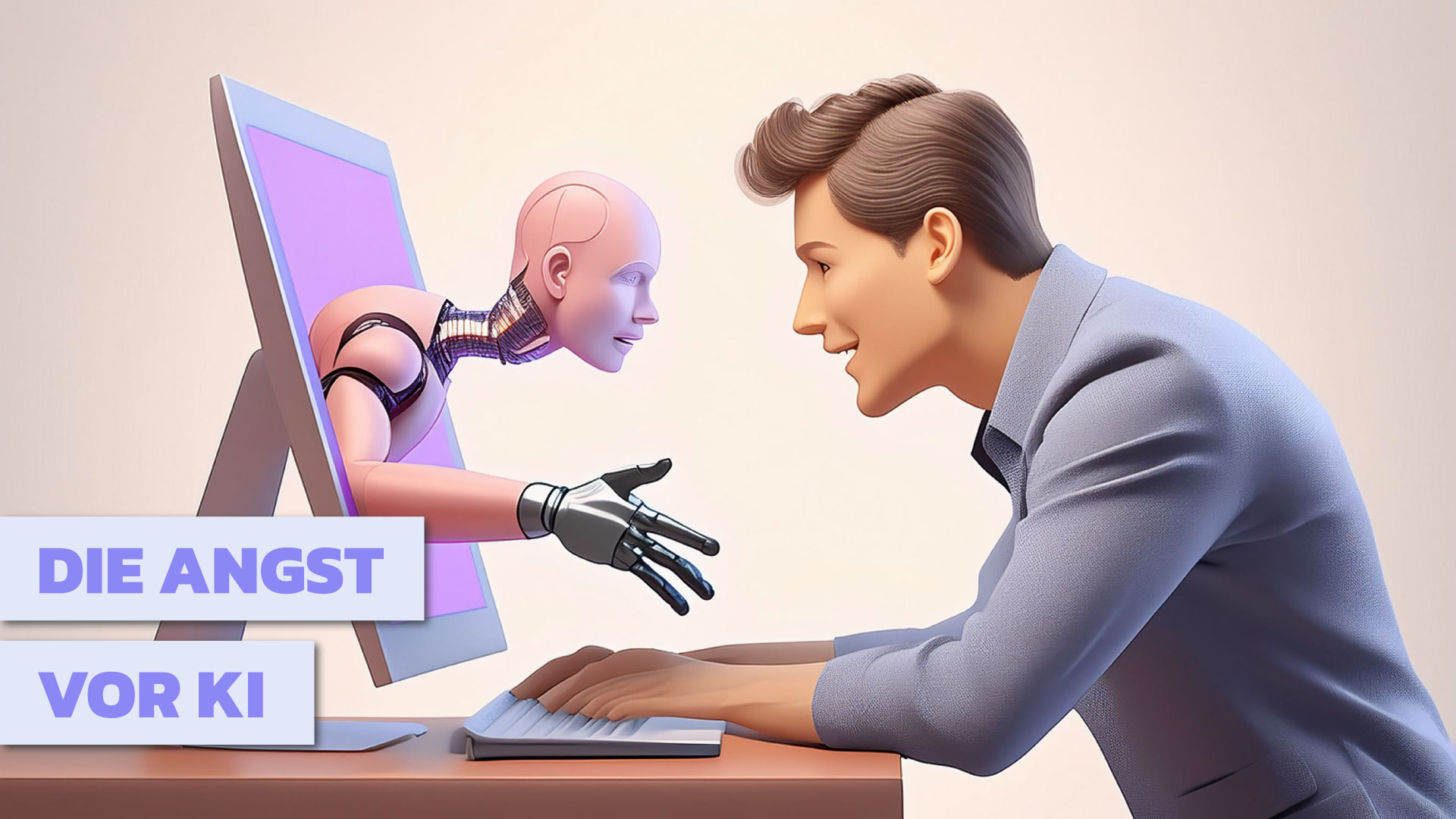
    In our Split Blog, we are addressing a very current and widely discussed topic today, namely the fear of artificial intelligence (AI). A topic suggested by our developer Sören, who ensures that Splitbot can also handle emails.

    Where is the best place to start when it comes to such a sensitive topic? Perhaps with the fear itself. Fear warns us of dangers and helps us make quick decisions. In that sense, it is extremely important and useful for the survival of the human species.

    We also often react with fear when we encounter the unknown. A reflex that also serves to act quickly and, for example, to flee. However, if our fear gets out of hand, it can severely impair daily life. That is why it is worth taking a closer look at the things that scare us and thus taking away their horror.

    The image that exists in many people’s minds of artificial intelligence is – admittedly – a very threatening one. This image is often shaped by old science fiction classics and is clearly exaggerated. The media also contribute to this with their often very one-sided and negative reporting. The population consumes media to be warned of impending dangers – so it is no wonder that headlines often target our fears. However, if you look not only at the sensational headlines, but also read the associated articles, a completely different picture often emerges.

    To get closer to the topic, there is another important point to clarify. Namely, the term “intelligence”. The word is derived from the Latin “intellegere” and means “to recognize”, “to understand” or “to see”. William Stern defined intelligence as the ability to adapt to unfamiliar situations. The ability of a person to find a solution even in a completely new situation.

    According to the current state of technology, no AI system can do exactly that.

    What appears to us as a spontaneous reaction, for example from chatbots, is in reality just a very quick access and output of predetermined data. Supposed humor, creative abilities or even predictions are based solely on the statistically highest probability of success that the system determines for the solution. Conversely, this also means that an AI cannot react if it does not have sufficient data to solve a problem.

    What can we do with this knowledge in relation to our fears? Yes, AI systems can access much larger amounts of data much faster than most people. But will they be able to act and think independently in the foreseeable future, for example? Definitely not.

    Yes, AI systems will change our working world. Processes will be accelerated and information flows will be changed. The tasks of workers will change equally in many cases. There will have to be experts who can operate and use these systems. So it’s time to prepare for this and deal intensively with the possible uses, instead of shutting yourself off out of fear. Further training and learning new skills have always been part of professional and personal development.

    Yes, it is absolutely right to express concerns and question innovations. This is the only way to ensure that all relevant factors are taken into account in the development of artificial intelligence. Different perspectives are crucial to achieving good results. This makes it all the more important not to leave the development of artificial intelligence solely to huge corporations that often provide little insight, but to actively help shape it locally.

     

  • Girlsday 2024

    Girlsday 2024

    On Girls’ Day, young women have the chance to gain insights into the professional world for a day. A particular focus is on industries in which the proportion of women is less than 40%, such as IT, crafts, science and technology.

    Why do we actually need Girls’ Day?

    The explanation is simple. Despite particularly good schooling, more than half of the young women in Germany choose from only ten occupations in the dual system. Among these ten occupations, there is not a single scientific or technical one. Girls’ Day therefore offers young women the chance to immerse themselves in professional fields that they would otherwise not consider. It helps participating companies to present themselves to particularly female career starters and to dispel prejudices about certain activities.

    At the launch of this year’s Girls’ Day under the motto “Artificial Intelligence (AI) and the Transformation of the World of Work”, Federal Chancellor Olaf Scholz discussed STEM career prospects with female students and experts. The Federal Chancellor stated: “Girls’ Day is important, ‘as long as it takes’ – as long as necessary. Our society is diverse and different – this should be reflected in working life. That is why it is so important to encourage girls to take up technical, scientific or mathematical professions. And that is why so many large, small and medium-sized companies are involved in Girls’ Day. They know: good teams are usually mixed teams.”

    We fully agree with this statement and are supporting the campaign again this year by offering two female students the opportunity to take a look behind the scenes of Kontor Business IT GmbH and our subsidiary, Splitbot GmbH. We were very pleased to have the two 14-year-olds Sarah and Nila with us today and to show them our everyday working life. We hope we were able to show them that IT is not boring.

  • Our Split Blog in April – P versus NP

    How do you explain a topic to outsiders that your own mind can barely grasp? Our editorial team faced this challenge this month. We are attempting it and hope we have succeeded.

    Many thanks to our developer Max, who broadened our horizons with the topic suggestion “The P versus NP Problem”

    Before we delve into this specific topic, we first want to shed light on the term “Millennium Problem.”

    The term Millennium Problems currently refers to seven unsolved problems in mathematics listed in 2000 by the Clay Mathematics Institute (CMI) in Cambridge. The institute has promised a prize of one million US dollars for the solution of each of these problems, provided that they are published in a specialist journal.

    The list includes these problems:

    1. the proof of the Birch and Swinnerton-Dyer conjecture from number theory
    • Analysis of the existence and regularity of solutions to the initial value problem of the three-dimensional incompressible Navier-Stokes equations

    Only one of these problems, namely the proof of the Poincaré conjecture in topology, has been solved so far. The Russian mathematician Grigori Yakovlevich Perelman was able to prove in 2002 that the conjecture is correct. After three teams successfully verified the solution, Perelman was to be awarded the promised prize money in 2010, even though he had only published the solution on the Internet. However, Perelman declined the money and the associated award.

    Let’s now take a closer look at the P versus NP problem in computer science, which has been unsolved for decades. This is a so-called decision problem. The question that arises is whether the class of problems that can be solved algorithmically with relatively little effort (“polynomial time”) (the class P) is equivalent to the class of problems that, although not necessarily with little effort, can at least be checked with a reasonable effort (“non-deterministic polynomial”) (the class NP).

    To illustrate the problem, one can, for example, visualise the so-called “Knapsack problems” in computer science. Imagine you are planning a hike and need to pack your backpack. The question is: Which items fit in the backpack and how much weight can you still pack? You can easily answer this question by simply packing the backpack and checking the total amount of weight. However, the real challenge is to predict which items you should choose to achieve the optimal weight. This is a typical NP problem.

    The question posed by the Millennium Problem P versus NP is therefore: Can a computer solve an NP problem quickly and efficiently, or are these problems fundamentally more time-consuming, even for a powerful computer? Answering this question could revolutionise the world of computer technology.

    If it turns out that P equals NP, this would be a breakthrough in solving many difficult problems, including optimising machine learning and cryptography. It would even mean that the secrets of science and technology could be unlocked like never before and our world could be improved by the computing power of computers.

    On the other hand, answering the question that P is not equal to NP would mean that there is a fundamental limit to the computer world. Some problems are simply too complex for a computer to solve quickly and efficiently.

    That is why the Millennium Problem P versus NP is so significant and interesting. It is a challenge that tests the limits of mathematics and computer science and helps us to expand our knowledge and improve our world through the incredible power of computers.

    As we all know, a wide variety of AI systems are currently conquering the market. With regard to the problem described, in particular, AI could be the key. Perhaps an AI software will succeed in proving the assumption that P equals NP. Or one of the upcoming AI models itself could be proof that an NP problem can be solved just as quickly and efficiently by a powerful computer as a P problem.

  • AI.STARTUP.HUB Hamburg – We are in!

    AI.STARTUP.HUB Hamburg – We are in!

    In a startup, there is always something new to learn. New goals are to be achieved, new challenges to be mastered. But what is the best way to approach this? Where can one find reliable expert knowledge, support, assistance, and indispensable contacts? Our recommendation: participate in an accelerator program. After gaining invaluable experience at the Lübeck accelerator program Gateway49, we have now successfully joined the Summer Batch 2024 of AI.STARTUP.HUB Hamburg.

    The AI.STARTUP.HUB offers excellent support to (aspiring) AI founders and their teams throughout all development phases. From ideation to internationalization – every team here has the opportunity to learn from the best in the industry.

    To cater to as many teams and development stages as possible, the AI.STARTUP.HUB offers two different programs: The AI Accelerator Program for already established startups and the AI Ideation Program for teams that aim to launch successfully and bring an innovative idea.

    The AI.STARTUP HUB Hamburg is a safe haven for all who are ready to actively contribute and develop further. The Hub is a joint project of Hamburg Innovation GmbH and the Artificial Intelligence Center Hamburg (ARIC) e. V. and is implemented together with partners Exponential Innovation Institute (Exii), Machine Learning in Engineering (MLE) of Hamburg University of Technology (TUHH), and German Entrepreneurship. Such a concentration of expertise in one format is a boon for any startup.

    Besides coaching and mentoring, one factor was particularly crucial for our participation: the exchange with other teams from the industry. The value of broadening one’s perspective should not be underestimated. Therefore, we are especially looking forward to sharing both our successes and our failures with the other teams, thus learning from and with each other.

    Our six-month journey has now begun with the kickoff on April 9 at the new location at Sandtorkai in Hamburg. It was a fitting start with a total of 17 exciting pitches in an incredibly relaxed and constructive atmosphere. We are enthusiastic about the other teams and the mentors and very proud of this further milestone on our journey.

  • Our Splitblog in March – Deep Mind Gemini 1.5

    Today we want to focus on the new AI model from Google. This is a multimodal AI model that can process various types of information, such as texts, images, program codes, and audio information and their combinations.

    A topic suggestion from our developer Mats, who is primarily responsible for the development of our chatbot Kosmo

    A few weeks ago, Google introduced DeepMind Gemini 1.5 – an update to the previous AI models from Google.

    The amount of data that Gemini 1.5 can process is particularly groundbreaking. Up to 1 million tokens can be provided in the context window. In internal experiments, the amount of data could even be increased to 10 million tokens. A token is a kind of basic unit with which, for example, sentences can be divided into smaller units (tokens) and thus processed by the model. A token is therefore a group of characters. For comparison: Chat GPT-4 Turbo can process 128,000 tokens (as of December 2023). This is roughly equivalent to a 300-page book. If more pages were provided, the model would no longer be able to access the information on the first pages. Figuratively speaking, at the end of a book, it would no longer know the author’s name.

    Gemini 1.5 can capture and analyze up to one hour of video material, eleven hours of audio recordings, texts with up to 700,000 words, or 30,000 lines of code. And, what is even more amazing, it can “remember” the content and connect it with new information.

    During the presentation of the new model, Gemini 1.5 was tasked with analyzing the 402-page transcript of the Apollo 11 mission and finding three humorous passages in it. In fact, the model succeeded in identifying three entertaining moments within about 30 seconds. For example, Command Module Pilot Michael Colins said at one point: “The Tsar is brushing his teeth, so I’m stepping in for him.”

    Without further information, the researchers then uploaded a hand-crafted drawing of a leaking boot and asked which moment was shown in the picture. The answer came promptly: “One small step for a man, but one giant leap for mankind.” Gemini 1.5 can therefore establish complex relationships and reproduce them correctly without concrete instructions.

    1. The architecture of the model is also advanced. It is no longer a uniform, large model approach, but a collection of smaller, specialized transformer models. This type of architecture is called Mixture of Experts (MoE). Each of these transformer models is, so to speak, an expert in its field and able to handle certain data segments or different tasks. Based on the incoming data, the most suitable model for the application is dynamically selected. For different inputs, different sub-networks of the model are activated for the appropriate outputs.

    This approach enormously increases the efficiency and quality of the results delivered.

    Gemini 1.5 is currently only available to selected corporate customers and developers. We are excited about the further development.

  • Is ChatGPT without Alternatives?

    Is ChatGPT without Alternatives?

    As part of the series ‘Success is the best job security,’ the ‘AI for SMEs’ event took place on Tuesday at Media Docks Lübeck. Dirk Schrödter opened the event with an appeal to the approximately 175 entrepreneurs present, advocating for courage in adopting new technologies. To remain successful and competitive in the long term, reservations must be overcome.

    Bodo Neumann from Grafix also encouraged those present to explore meaningful applications of AI within their companies.

    With the aim of familiarizing guests with AI applications, Caro and Tadeusz were on site, ready to answer any questions from interested parties. In a presentation titled ‘Overview of Open Source AI Solutions and How to Implement Them,’ our CEO took the opportunity to introduce the audience to solutions beyond the mainstream and discuss their GDPR-compliant application possibilities.

    Tadeusz compared various open-source and closed-source applications, detailing their respective advantages and disadvantages. It is often mistakenly assumed that open source is insecure and not GDPR-compliant compared to other applications. However, the opposite is true: with open source, users secure their digital sovereignty and absolute data security. Open source software offers companies the option of operating it in their own data center and is also individually adaptable to specific needs. Since open source models can draw upon a worldwide community, their performance is usually many times higher.

    • Further advantages of Open Source:
    • Transparent codebase
    • Collaborative development
    • Free of license fees
    • Open interfaces
    • Traceable development process
    • More innovation through open exchange
    • Access to expert knowledge

    Afterward, many interesting discussions arose, allowing for further exploration of the topics. It was an extremely successful evening, and we thank the Business Development Agency Lübeck and the Merchants’ Guild of Lübeck, and especially the curious and innovation-minded audience, for the magnificent event.

  • Our Splitblog in February – AI as an Opponent in Video Games

    Our Splitblog in February – AI as an Opponent in Video Games

    How do you fill a blog from the world of AI with exciting and interesting content? So many topics have been discussed in detail by so many people in recent months. What new aspects can we add to it? We asked ourselves these questions in the team today and once again it turned out that the spontaneous ideas are often the best. A new blog section, the “Splitblog” is born. From now on, every month a team member can choose a topic from the AI environment that will be highlighted in this category.

    It starts with our backend developer Florian and the topic “AI as an opponent in video games”

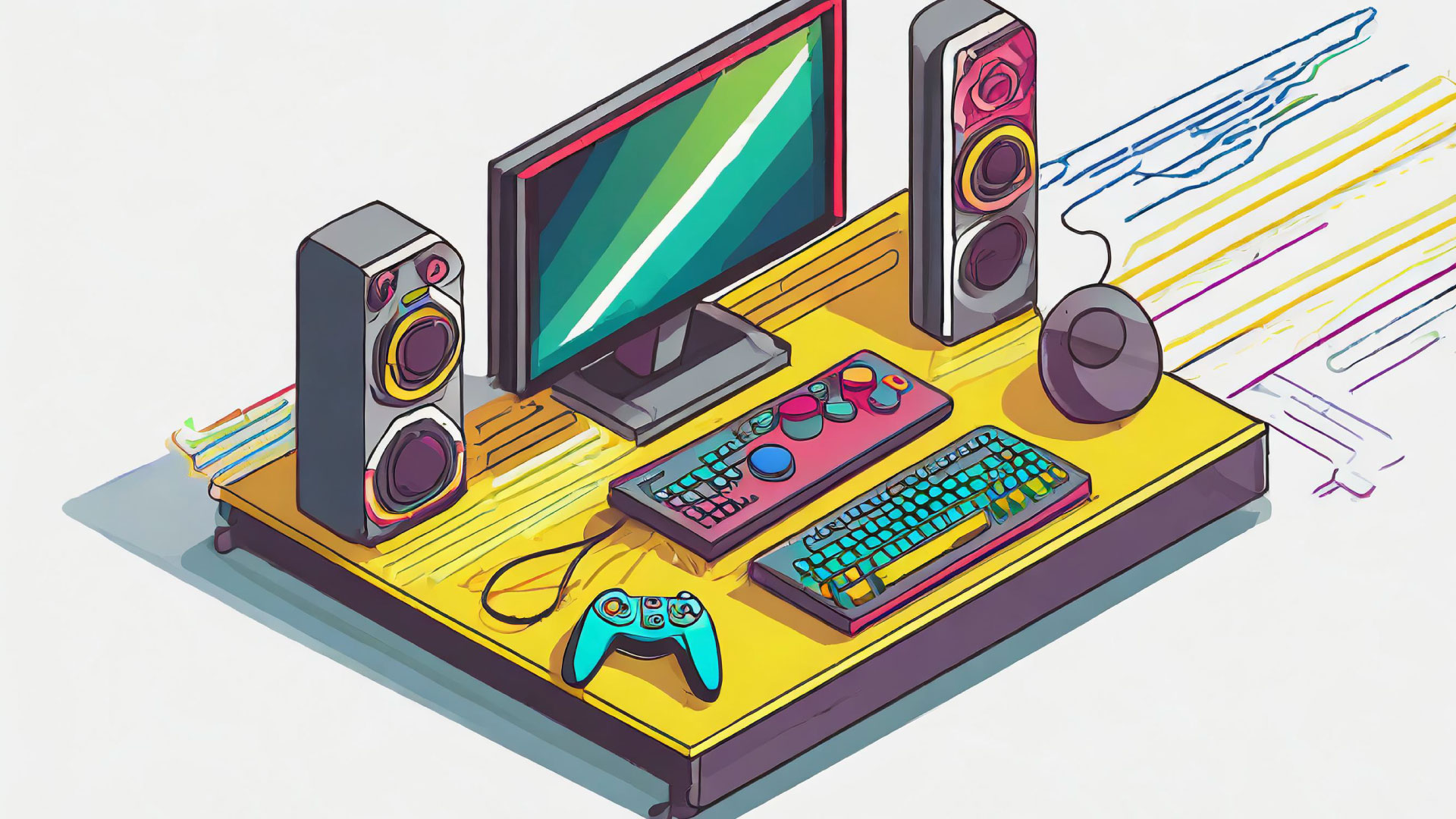
    A brief look at the video games of recent years shows that most of the improvements have largely been related to the graphics. More and more details, ever larger worlds, ever better resolution. The graphics in many games are now so sophisticated that they can hardly be distinguished from reality. But what about the behavior of the various characters? Especially when it comes to programming the NPCs, it is reasonable to assume that artificial intelligence has been used here for a long time. NPCs are the non-playable characters in a video game, such as passers-by, road users or even opponents. In many games, it is already possible to interact and communicate with them and their behavior often seems unpredictable. But what looks like artificial intelligence from the outside is actually the achievement of the game developers. Instead of artificial intelligence, video games often use so-called “pathfinding”. This means that the paths and actions of the NPCs were determined during the development of the game. The options of the NPCs are limited in this case and can depend on various factors, such as the strength of the player. The more possible options and factors that are defined in the development, the more realistic the behavior of the NPCs appears.

    But why isn’t AI used in game development?

    The assumption is that the use of artificial intelligence improves the gaming experience. The behavior of the NPCs would be more situational, individual and less predictable. Communication could also be adapted much more to the players.

    What is often disregarded in this supposed improvement, however, is that a learning AI could quickly ruin any fun. The probability is high that it would be almost impossible for the players to win against AI-controlled NPCs. Also, because the NPCs could team up.

    And another factor would be difficult to control: NPCs that are based on AI would, for example, be able to leave locations and simply “no longer participate”. Under these conditions, storytelling within a video game is not feasible.

    In simple terms, the use of artificial intelligence in video games would negatively affect the fun of the game. Who likes to play a game that you can’t win?

    Nevertheless, there are first games in which artificial intelligence is used. The worlds and possibilities are still limited in these games, but that will change. Development teams have already succeeded in limiting the superiority of AI-controlled NPCs, for example. A good example of this is AlphaStar. An AI-based program that has been trained to play StarCraft II. Here it has already been possible to throttle the AI in its actions and abilities, so that AlphaStar remains a fair opponent (at least for absolute game professionals). We can be curious to see how AI can be integrated into video games in the coming years.

  • Year in Review 2023

    Year in Review 2023

    A momentous year is drawing to a close. We are almost at a loss for words considering all the incredible events of the past months, but we nevertheless wish to take this opportunity to reflect on 2023.

    Those who have followed Splitbot’s journey know that Kontor Business IT GmbH has been working on AI-based software since 2021. This software automates (administrative) processes in various scenarios and returns a crucial work factor to skilled professionals: time.

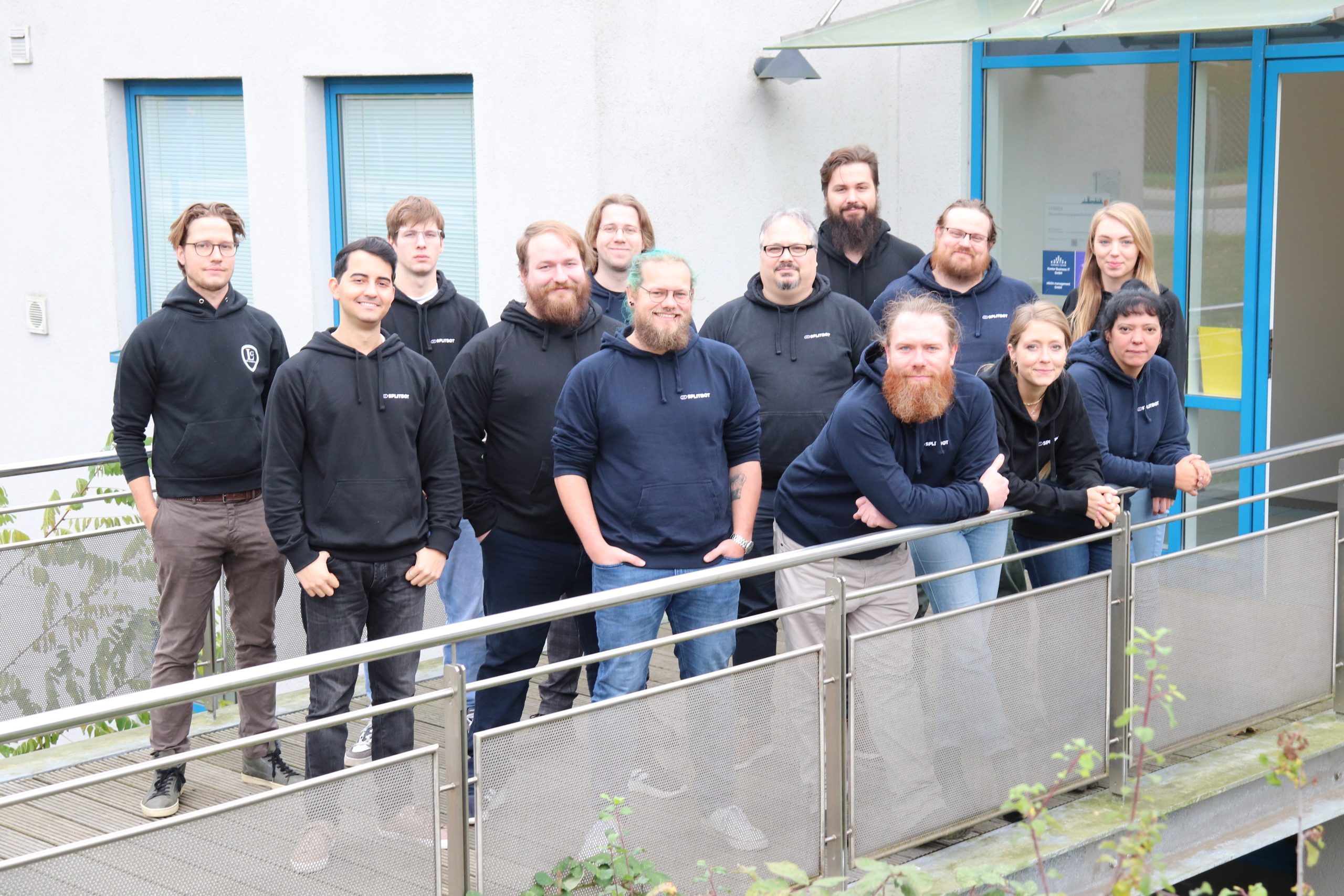
    The urgent needs of our customers and the consistently open-minded and positive feedback then tipped the scales for a significant corporate decision. On March 15th of this year, Splitbot GmbH was spun off as a wholly-owned subsidiary of Kontor Business IT. This milestone not only highlights Splitbot’s potential but also enabled immense growth. From originally one developer working on the project with Tadeusz, a team of ten people has emerged, working exclusively for Splitbot. Additional colleagues undertake important tasks for both companies, thus ensuring success. Core team members and the minds behind Splitbot are: Florian Roßmann, Mats Kastner, Søren Molkentin, Bartosz Golis, Maximilian Esch, Muhemd Al-Moayad, and Katharina Kirstein. We are particularly proud to be able to support two young individuals in their training: Arturs Tinte and Ramtin Abouie. Vincent Schiller has also recently joined the team as a working student.

    Anyone who has visited our website is also familiar with the faces of our bots. Behind them lies the creative and design work of Friedrich Wehrmann and Maximilian Hertwig. We are also particularly grateful to Kristina Andresen, who, with tireless dedication, handles all administrative tasks and thus made a significant contribution to the creation of Splitbot. Last but not least, Carolina Wehrmann and Tadeusz Nikitin should, of course, be mentioned here. Without them as management, and without their belief in the project and their courage to break new ground, none of this would have been possible.

    However, mere presence is not enough for a company’s success. Every individual contributed to our ability to achieve further significant goals.

    A significant phase for us was particularly our participation in the Gateway 49 Accelerator Program. During this time, we learned an incredible amount and were able to build a broad network. We are very grateful for the support of the entire Gateway team.

    We were greatly honored by the visit of State Secretary Julia Carstens. Ms. Carstens was given a detailed presentation by us on Splitbot’s capabilities and interacted with Sigma in our VR room.

    A great success for us was also our inclusion in the Alpha Program of this year’s Web Summit in Lisbon. We were not only able to participate in this enormous event but also to present Splitbot at an exhibition stand, in the Startup Showcase, and in a 40 Words video. We are still overwhelmed by Lisbon and all the impressions we were able to gather.

    Through collaboration with DiWiSH, the AI Bundesverband, KI.SH, and WTSH, we were not only able to participate in various events but also to introduce ourselves and actively shape the digital future. Thus, Tadeusz, with his AI expertise, has become a sought-after speaker and a valued contact person at all levels.

    The successful deployment of Splitbot in our administration and in Business IT support were further events we were able to celebrate. The onboarding of our pilot customers is progressing successfully, and we will begin the new year with the implementation of further customer projects. New and promising ideas are already awaiting implementation, and we are excited to see where our journey will take us in 2024.

    Until then, we wish you and your loved ones wonderful holidays and a peaceful New Year.

    The Splitbot GmbH Team


  • Web Summit 2023 – We Were there!

    Web Summit 2023 – We Were there!

    Today we had the first snow of the year. It’s hard to believe that just a few days ago we were strolling through sunny and warm Lisbon without a jacket and scarf.

    In mid-August, we applied to participate in the ALPHA program of the Web Summit without initially imagining we had a great chance of participating. But then, a few days later, an employee from the Startup Team contacted us and invited us to an online meeting. Shortly thereafter, we received the joyful message: We’re in!

    The ALPHA program includes three-day access to the Web Summit for three people. In addition, an exhibition stand on one of the three days and the opportunity to apply for further startup activities. We didn’t want to miss out on this, of course, and also applied to participate in the PITCH competition, the Startup Showcase, and 40 Words. Our efforts paid off and we actually received two acceptances.

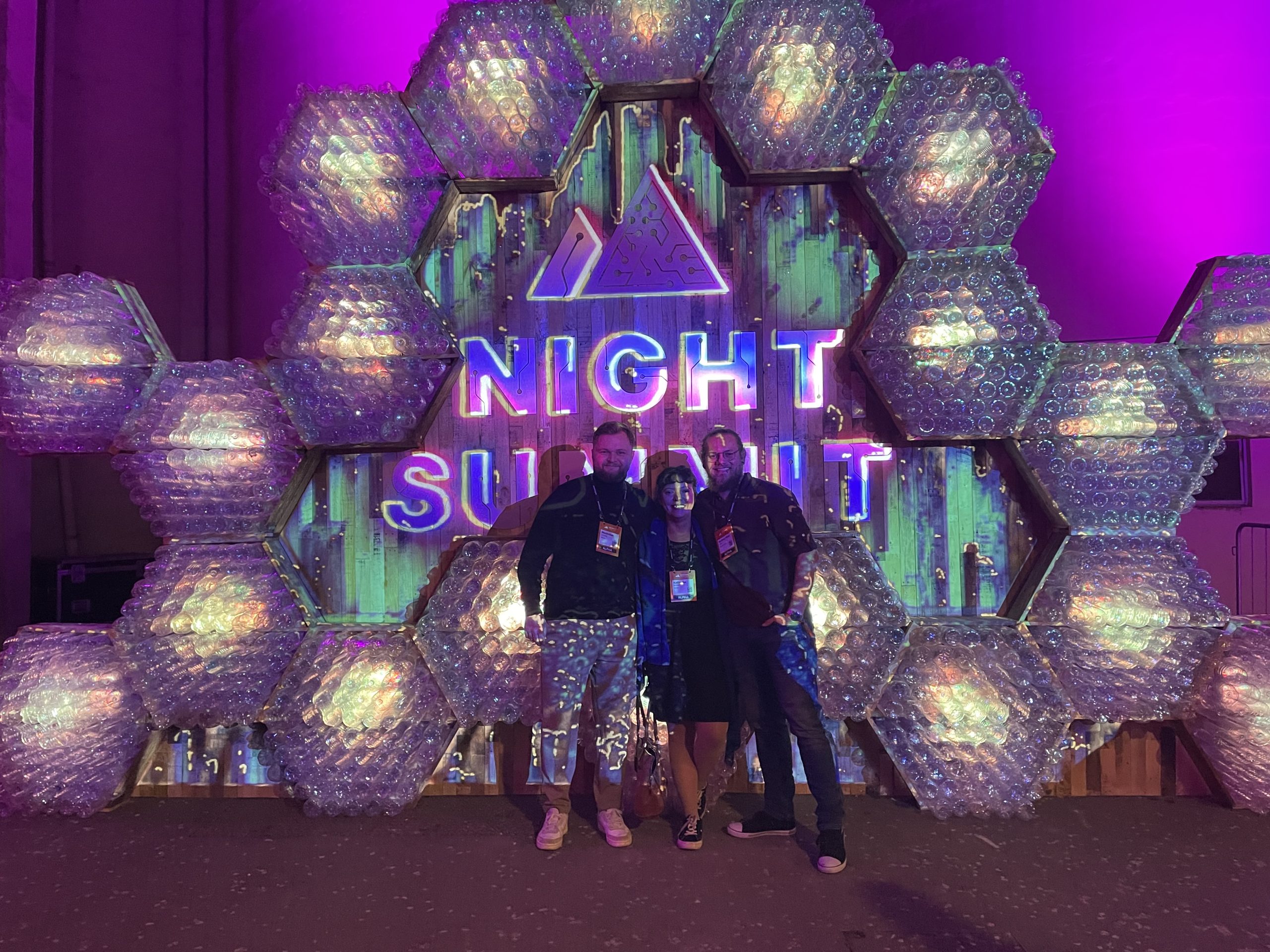
    So, on November 13th, we set off from Hamburg to Lisbon. To spare our wallets, we had chosen a cozy apartment in the Alfama district. Although we didn’t make it to the opening event in time, we were able to make first contacts at the Night Summit in the Hub Criativo do Beato and enjoy the Portuguese flair.

    On Tuesday, we were able to present Splitbot at our stand all day. Here, too, there were many interesting discussions with potential customers and partners, and it became clear that we stand out strongly from other startups with our self-developed code. After a short stop back at our accommodation, we were guests at the German Startup Night in Factory Lisbon in the evening. This was hosted by the Federal Ministry for Economic Affairs and Climate Action, among others, and we ended the exciting day with stimulating conversations with people from a wide range of industries.

    We took things a little easier on Wednesday. After a morning meeting with a potential investor in the old town of Lisbon, we attended several pre-arranged appointments. Again, great contacts were made, which we have already been able to further develop and utilize. In the afternoon, we enjoyed the fantastic diversity of Lisbon on a ride in the traditional tram and then met up with some startup colleagues for tapas.

    On Thursday, we went full throttle one last time and cheered on our developer Bartosz at the Splitbot presentation in the Startup Showcase – a two-minute bare-bones pitch on a big stage. Bartosz presented as confidently as ever and received a lot of applause and further exciting contact details. Afterwards, we went straight to the airport and back to our home turf.

    We thank everyone who has accompanied us on our journey and look forward to the coming year.

  • The Great Ethical Question

    The Great Ethical Question

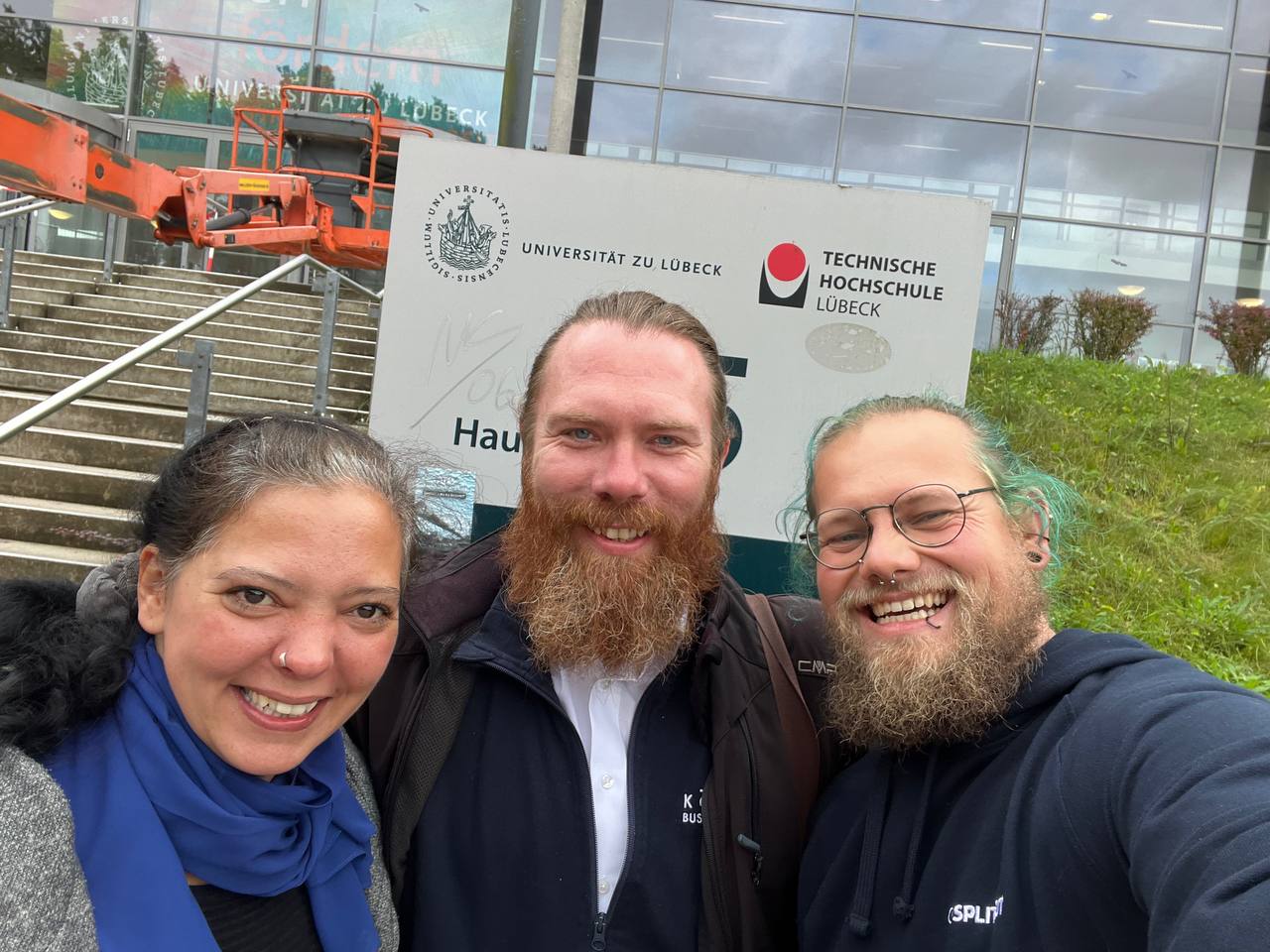
    In the context of Artificial Intelligence (AI), ethical standards and guidelines are frequently questioned. What constitutes ethical use of AI? What requirements do we need? And what do we consider ethical and unethical? These and similar questions arise in the media, in discussions with clients, and in our private lives. However, we ourselves, in particular, continuously reflect on our work and our standards. Even before the establishment of Splitbot GmbH, our team collaboratively developed guidelines on this subject. It became clear that defining ethical principles is not straightforward. While there is a common societal understanding of morality and ethics, individual interpretations and personal assessments vary in certain aspects. It is clear to us that no software, with or without AI, inherently understands ethics. Ethical guidelines must, if at all possible, be set by humans. This approach is also reflected in the definition of ethics. Ethics is the science of morality and thus the evaluation of human actions. Therefore, it may be less about adding rules to our software and more about ensuring its ethical deployment.

    The assumption that AI possesses the ability to think for itself is simply untrue. At its core, AI is not much more than very, very precise statistics. AI determines probabilities based on data. Without appropriate training data, an AI program cannot generate results. It is precisely this data that causes AI programs to occasionally appear unethical. For example, if an AI for selecting applicants is trained only with data from male applicants, it will not be able to consider female applicants equally. Therefore, both in data provision and in the evaluation of the results delivered, human ethical judgment is required. It must also be permissible to question to what extent the use of Artificial Intelligence for the automated answering of complex questions might not contradict ethical principles. The goal must therefore be to establish ethical guidelines for the individuals involved, not for the programs themselves. AI is just one of many potential tools that can be misused. But what might such guidelines look like? This is just one of many questions for which we have not yet found a definitive answer. We are all the more grateful for the collaboration with Prof. Dr.-Ing. Christian Herzog and the students of the Technology Ethics degree program at the University of Lübeck, which we recently initiated. Prof. Dr. Herzog offered us and other startups from the region the opportunity to introduce ourselves and present our ethical questions. The participants of the degree program will address a wide range of ethical topics in the coming weeks and present their proposed solutions. We are very much looking forward to the intensive exchange and especially to examining the topic from different perspectives. This enables us to consider as many aspects as possible in the further development of our product.